Komei Hasegawa
(First name Family name)
Ph.D. in Engineering
Associate professor
Ogoshi Lab.
Faculty of Engineering,
University of Fukui
Researchmap
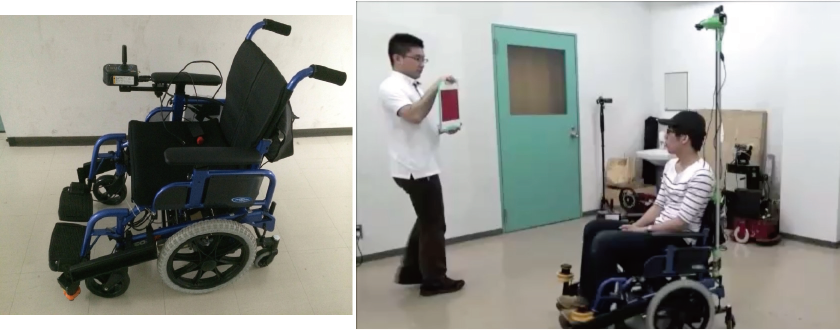
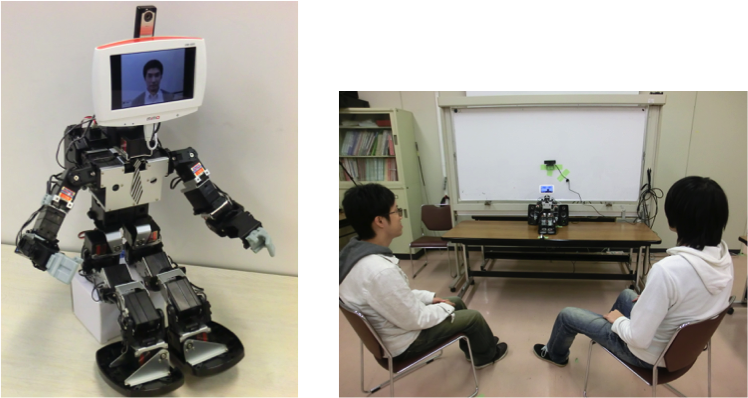
I'm researching interaction design between humans and artificial agents, and supporting system for human-human communication. My research interests include Human-Agent Interaction (HAI) and Human-Robot Interaction (HRI). I'm also interested in Human Interface and Cognitive Science.

Contact
- komei-h [atmark] u-fukui.ac.jp
- komei.hasegawa [atmark] gmail.com
Career
-
University of Fukui
- April 2026-
Associate professor, Ogoshi lab., Faculty of Engineering, University of Fukui
- October 2025 - March 2026
Researcher, Department of Computer Science and Engineering, Toyohashi University of Technology
- October 2017 - September 2025
Assistant professor, ICD lab., Department of Computer Science and Engineering, Toyohashi University of Technology
- April 2015 - September 2017
Postdoc Researcher, Imai lab., Keio University (JSPS Scientific Research on Innovative Areas Project "Cognitive Interaction Design") - 25 March 2015
Ph.D.(Engineering), Dept. of Intelligent Interaction Technologies, University of Tsukuba - 23 March 2012
Master of Engineering, Dept. of Intelligent Interaction Technologies, University of Tsukuba - 25 March 2010
Early graduation (One year earlier)
Bachelor of Engineering, College of Engineering Systems, University of Tsukuba - Born in February 1989